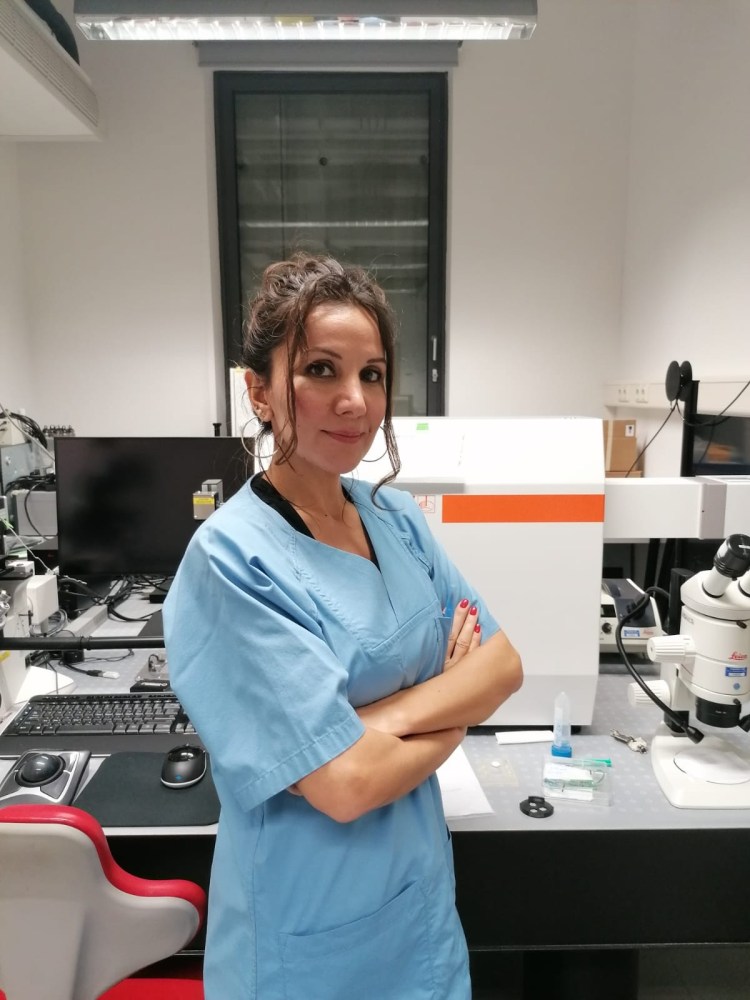
I am currently working as a scientist in Leibniz Institute of Photonic Technology (Leibniz-IPHT) (Leibniz-IPHT) closely collaborates with Friedrich Schiller University Jena in the field of photonics. (Friedrich Schiller University) Before I joined Leibniz-IPHT, I was working as a European Union Project Researcher in Sabanci University Nanotechnology Research and Application Center (SUNUM), İstanbul, Turkey. I had involved several projects including HORIZON 2020 (H2020), TÜBİTAK projects. EU project includes 23 partners from 11 countries. The main goal of research in H2020 is the surface modification of ENMs such as carbon based NMs, silica nanoparticles with safe by design approach to reduce eco/cytotoxicity. I was a post-doctoral researcher in Nanobiotechnology and Molecular Engineering Research Group of Genetics and Bioengineering Department at Yeditepe University, Istanbul, Turkey, led by Prof. Mustafa Culha (https://mustafaculha.net/). During my post-doctoral experience in Prof. Culha’s laboratories, I was exposed to several research project including biological/medical Surface-enhanced Raman Scattering (SERS), synthesis, characterization and the use of several nanomaterials including silver nanoparticles (AgNPs), gold nanoparticles (AuNPs), hexagonal boron nitrides (hBNs) and boron nitride nanotubes (BNNTs) in medicine for delivery and therapy. My involvement with the SERS project extends to living single cell analysis and “liquid biopsy” for cancer diagnosis. Since I have been in both academic and industrial environments, and I am sure that I would like to remain in academia. When I continue in this direction, I am interested in research involving understanding of how small molecules adapt to a range of intracellular environments, and how cells respond in complex tissue in the process of inflammation. Please note that I have experience not only in vitro but also in vivo studies involving arthritis animal models. The stability of drug molecules is critically important since the formed new molecular structures, considered as impurities, can be vital due to their possible adverse effects. During my PhD, I investigated the identification and characterization of the degradation products of tofacitinib, a Janus kinase inhibitor, using mass spectroscopy (MALDI-TOF MS) and liquid chromatography (LC). For my master’s study, I worked on the determination of ionization/protonation constant (pKa) value of conventional disease modifying anti-rheumatoid arthritis drugs (DMARD). My industrial experience involves the responsibility of introducing DMARD drugs for rheumatoid arthritis, psoriatic arthritis and ankylosing spondylitis. I was given the responsibility to form and manage a group of professionals to market traditional DMARDs such as methotrexate, sulfasalazine, leflunomide, azathioprine, α-TNF inhibitor (Biologic DMARD) and tofacitinib (janus kinase inhibitor) in Turkey. During this experience, I was regularly in contact with clinicians and patients collecting data about the efficiency of the drug. In this context, I also wrote projects for funding to better understand the efficiency of these drugs on animal models with arthritis and rheumatoid arthritis patients.
 Dr. Hülya Yılmaz